

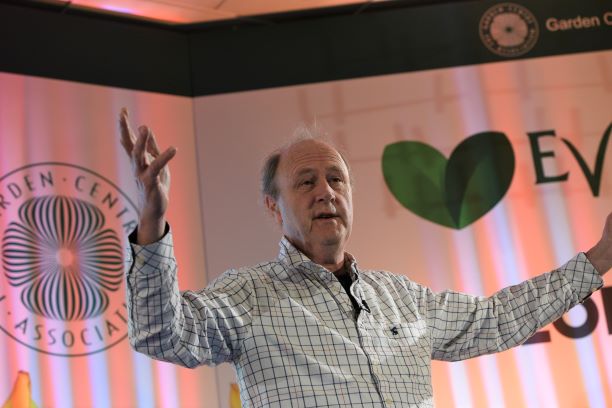
Another highlight from our 2020 conference was hearing from co-founder and Executive Vice Chair of the award-winning Eden Project, Sir Tim Smit KBE.
Everyone who is familiar with the Eden Project will know how successful it has been. It is both a showcase for world-class horticulture and an architectural symbol of human endeavour.
Eden has taken a pivotal role in Cornwall’s regeneration, showing that sustainability is about good business practice and citizenship. It has contributed £2billion to the Cornish economy and its next planned development is a huge geothermal plant, designed to meet all Eden’s energy needs and power 5,000 homes. It’s a beacon of eco-friendly endeavour.
Tim is a trustee, patron and board member of several bodies. He has received the Royal Society of Arts Albert Medal and was voted ‘Great Briton of 2007’ in the environment category of the Morgan Stanley Great Britons Awards.
He is also an inspiring businessman and spoke to our attendees about the value of leading by example, showing how to engage a team by daring to be ambitious, moving out of your comfort zone, keeping to your principles and meeting challenges head on. This was all extremely helpful advice for our garden centre managers.
Speaking about the Eden Project, Tim said there had been 21 million visitors to date.
All suppliers to Eden have 18-month contracts and after this, if the supplier can be waste neutral, the contracts are extended by a further 18 months.
Tim said there was a huge revolution coming in wellbeing, common health and connection to green stuff. Garden Centres should be places of cultural importance, working with the grain of nature.
He also said there is a great deal of good PR to be had from garden centres engaging in non-commercial and community activity, such as planting schemes and engaging younger people who see themselves as citizens, not customers.
We are currently living through the start of the revolution in wellbeing, health and the connection to nature that Tim talked about, due to the pandemic, as gardening has become more important to people’s mental and physical health and wellbeing than ever before.
It was interesting to hear what Tim had to say, especially as it coincided with the conference’s environmental theme. Tim argued that the twin challenge of economic hardship and climate change makes it necessary to embrace the spirit of war – with a radical approach based less on choice and more on responsibility. Something that is more apparent this year than it ever has been and as an industry we’re keen to embrace this.